 English
 Español
 Русский
 Français
 Deutsch
 عربي
عربي 中文
中文Prosthetic heart valves require controlled storage conditions
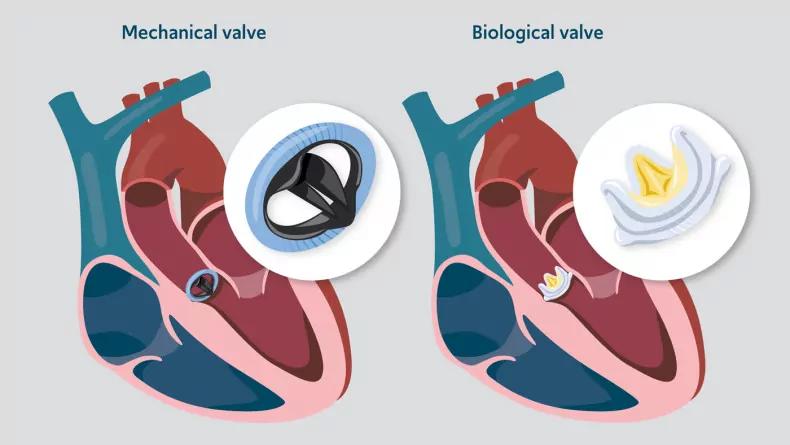
Prosthetic heart valves are implantable medical devices that must be stored and transported under defined environmental conditions. To support product integrity and regulatory compliance, temperature exposure throughout storage and transportation needs to be properly managed, especially during long-distance distribution and extended storage periods. Thermis Tag 1 single-use time–temperature indicator (TTI) provides visual insight into temperature exposure during prosthetic valve storage and transportation, supporting cold-chain quality management. The table below summarizes common prosthetic heart valve types and their typical storage and transportation requirements.
Valve Type | Storage Environment | Temperature Requirements |
| Mechanical Valves (Pyrolytic carbon/metal) | Dry, sterile secondary packaging. | 15°C – 30°C (Room temperature ) |
Tissue Valves (Wet) (Porcine/Bovine) | Submerged in 0.5% Glutaraldehyde solution. | 5°C – 25°C (Avoid freezing ) |
| Tissue Valves (Dry) (Advanced) | Oxygen-free, moisture-controlled vacuum packaging. | 15°C – 25°C (Ambient) |
Human Allografts (Donor tissue) | Cryopreserved in liquid nitrogen vapor. | -135°C to -196°C (Ultra-low) |
Tissue-based valves present higher cold-chain sensitivity
Compared with mechanical valves, tissue-based prosthetic heart valves are generally more sensitive to environmental conditions due to their biological composition and preservation methods. During storage and transportation, cumulative temperature exposure and unnoticed excursions may occur across multiple handling stages, increasing the difficulty of maintaining consistent cold-chain control.
Limited temperature visibility increases transportation risk
A key challenge in prosthetic valve logistics is the lack of visibility into cumulative temperature exposure once products leave controlled storage. Spot checks and end-point inspections cannot reflect what happens during transit or intermediate storage.
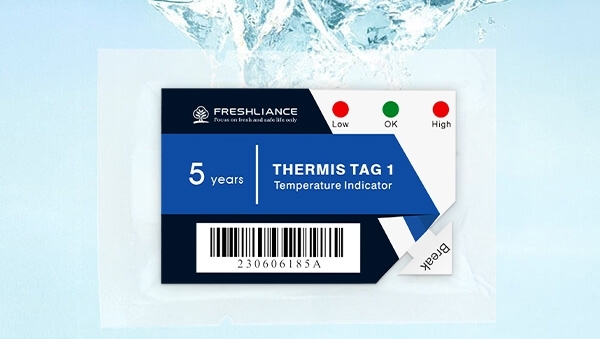
Thermis Tag 1 time–temperature indicator addresses this gap by providing a clear, visual indication directly on the package. The irreversible color change shows whether predefined time–temperature thresholds have been exceeded, enabling rapid screening and early identification of shipments that may require further evaluation, without the need for power, software, or data retrieval.
Thermis Tag 1 TTI supports long-term compliance and traceability
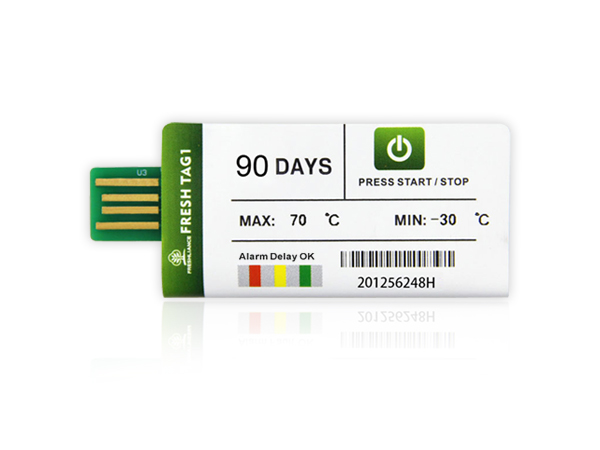
Prosthetic heart valves often involve extended storage and complex distribution processes, placing high demands on monitoring stability and flexibility. Thermis Tag 1 Time–Temperature Indicator (TTI) provides a wide monitoring range of –30 °C to +70 °C (±0.5℃ at full range) with customizable temperature thresholds, allowing it to adapt to different storage and transportation requirements across valve types. Its service life of up to five years supports long-term inventory management, while unique serial numbers enable clear traceability. Together, these features help integrate visual time–temperature monitoring into compliant, long-duration prosthetic heart valve storage and logistics workflows.