
Simplifying Temperature Mapping with Bluetooth Temperature Data Loggers
Facilities like cold rooms, warehouses and stability chambers rely on regular temperature mapping to complete essential space qualification work. This standard validation practice helps teams grasp real temperature distribution across controlled environments and spot localized zones that deviate from average ambient conditions. General mapping workflows require deploying multiple sensors at fixed positions and gathering data over a set testing period. However, sensors mounted on high racks, inside enclosed chambers and other hard-to-access spots create extra workloads during post-test data retrieval and downloading. The Freshliance BlueTag TH30R Bluetooth temperature data logger streamlines multi-point data collection and review for routine temperature mapping tasks.
1. Collect Data Without Removing Every Logger
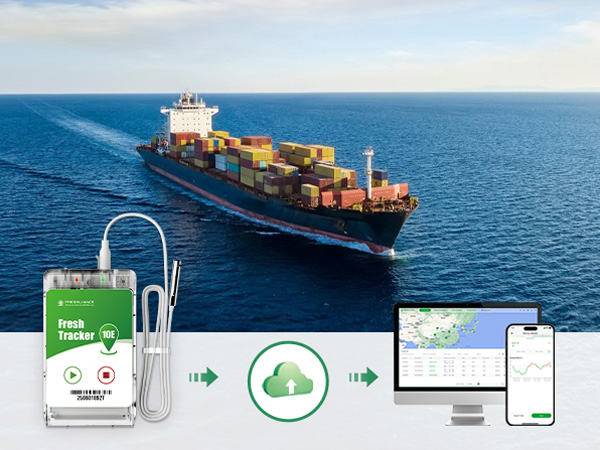
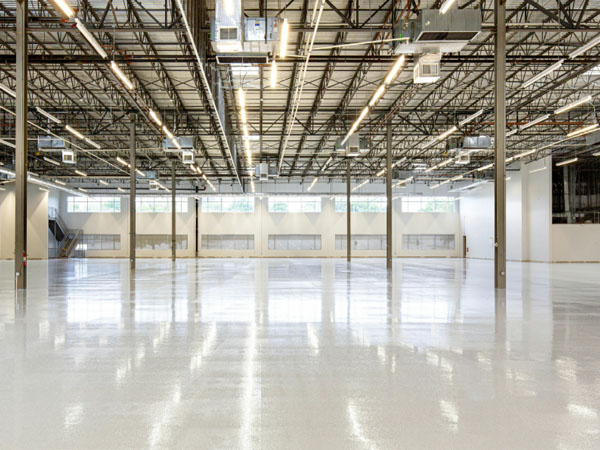
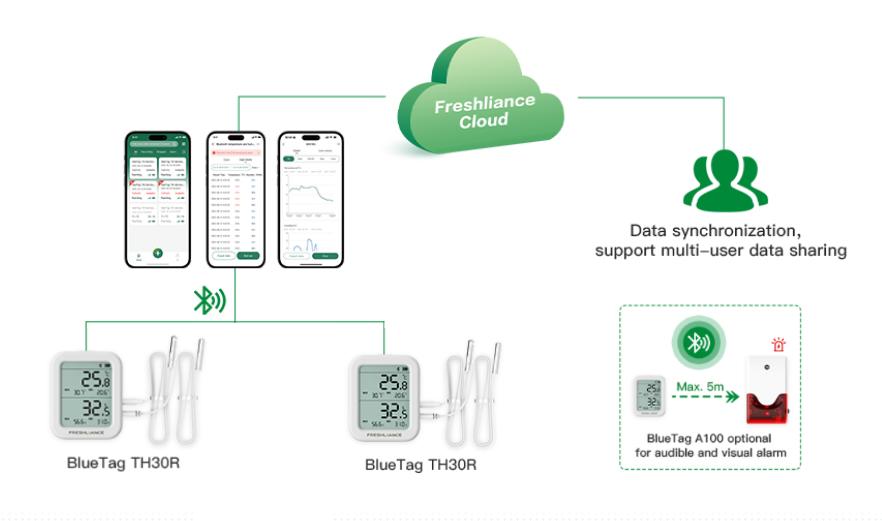
In a large storage area, a thermal mapping study may involve many monitoring points. Physically removing each logger to download its data can add unnecessary work, particularly when devices are installed at different heights or in areas that are not easy to access. With the BlueTag TH30R contactless temperature data logger, users can connect to the logger through Bluetooth and access recorded data using the Tkeeper APP. This allows the data to be reviewed without repeatedly removing the logger from its installed position. The APP also supports data analysis, including temperature trends and statistical information, helping teams review the results from different monitoring points more efficiently.
2. Reach Difficult Monitoring Locations with External Probes
Sensor placement is an important part of temperature mapping. Temperature conditions can vary between different areas of a storage space, particularly around doors, air outlets, corners, or locations with restricted airflow. The BlueTag TH30R Bluetooth temperature data logger has a built-in temperature and humidity sensor and can be configured with up to two external probes. The built-in temperature sensor covers -30℃ to +70℃ with an accuracy of ±0.5℃ F.S. External probes can be placed directly at locations where temperature needs to be measured while the main logger remains in a more accessible position. This setup can be useful when monitoring points are located inside chambers, freezers, racks, or other areas where placing the entire logger would be inconvenient.
3. Compare Temperature Conditions Across the Mapping Area
After completing on-site data collection, validation teams need to cross-check readings from different monitoring zones. Analyzing recorded data point by point allows staff to verify stable temperature compliance and identify spots with obvious thermal fluctuations. The BlueTag TH30R supports flexible logging intervals ranging from 1 to 99 minutes, with each probe capable of storing up to 20,000 individual readings. All captured data can be freely filtered, analyzed and exported as standard PDF or CSV files directly via the mobile APP. These records provide the data needed to document the mapping study and support further review of locations that show unusual temperature patterns.
4. Make Mapping Data Easier to Manage
A thermal mapping study is not only about collecting temperature readings. The resulting data also needs to be organized and reviewed as part of the qualification process. By combining Bluetooth data access, optional external probes, configurable logging intervals, and PDF/CSV reporting, the BlueTag TH30R Bluetooth temperature data logger can help reduce the manual work involved in multi-point temperature data collection. For QA and validation teams, this means less time spent retrieving devices and transferring readings manually, and more time available for reviewing the actual temperature distribution across the monitored area.
For facilities that regularly perform temperature mapping, a wireless data logger can therefore make routine data collection more convenient while providing a consistent record of temperature conditions across different monitoring points.