

Temperature Monitoring in SIP Sterilization: Ensuring Filter Integrity and Process Reliability
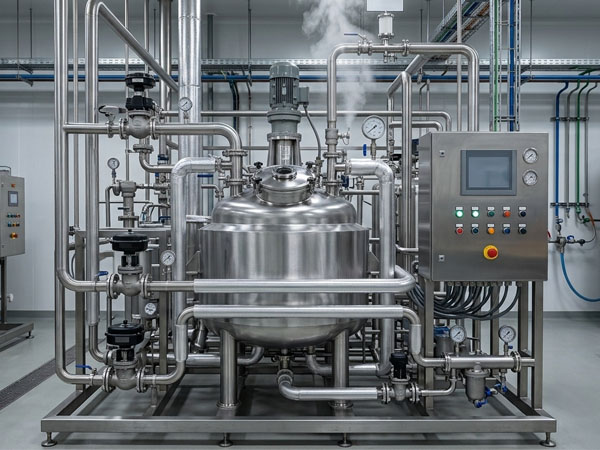
Sterilization-In-Place (SIP) is the standard, pipeline-free sterilization technique adopted across pharmaceutical sterile production lines. It streamlines full-system sanitization without requiring equipment disassembly, yet the high-pressure steam it relies on comes with notable operational challenges. While steam effectively eradicates microbial contaminants to meet sterility standards, the extreme heat and pressure generated throughout the process are the leading causes of integrity failures in hydrophobic and hydrophilic sterile filters. For manufacturing teams, balancing full regulatory sterility and expensive filter asset protection is key. This relies on a clear grasp of filter material tolerance limits, paired with accurate temperature monitoring throughout every single SIP operation cycle.
The Thermal and Mechanical Vulnerability of Sterile Filters
During a typical SIP cycle, filters are exposed to extreme environments (typically 121°C to 135°C or higher). The structural polymers of the filter cartridges exhibit distinct physical vulnerabilities at these temperatures:
Material Degradation: Temperature elevation directly weakens the mechanical stability of PTFE hydrophobic air breather membranes, as well as PVDF and PP product filter membranes. Polypropylene (PP), the standard material for filter cages and support frameworks, has a melting point of roughly 165°C. Even minor, unregulated thermal spikes near 145°C will bend, deform, or permanently compromise filter structural integrity.
Differential Pressure (Delta P) Sensitivity: At 135°C, every filter’s safe differential pressure threshold drops sharply. A typical PVDF filter, for example, only tolerates 350 mbar (0.35 bar) forward differential pressure and cannot withstand any reverse pressure at all. Steam pressure and temperature are inherently correlated, so abrupt thermal spikes trigger instant pressure surges. These surges easily rupture softened filter pleats, leading to unplanned filter failure mid-cycle.
Integrating Freshliance Iron Tag 100 rugged temperature data logger into the SIP Workflow
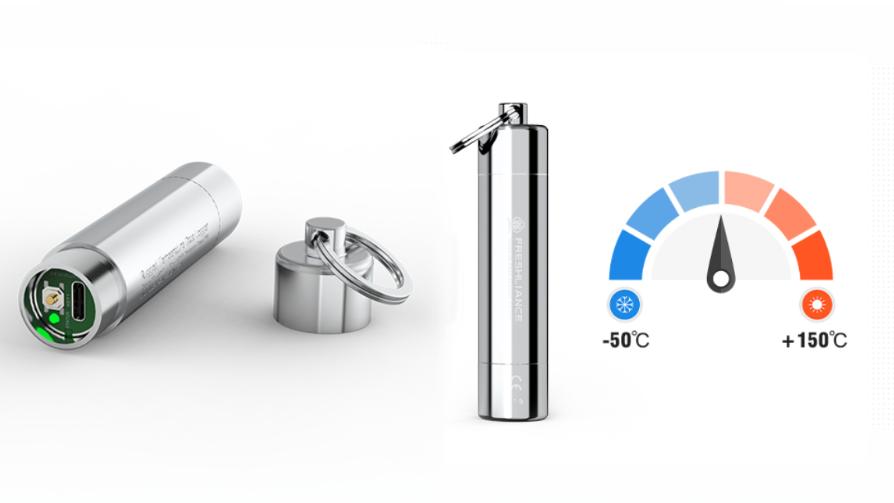
Close temperature parameter monitoring across all key SIP stages is critical to avoid catastrophic filter failure. Standard plastic-shelled loggers are not built for these harsh conditions; repeated exposure to saturated steam cycles causes casing warping, severe sensor drift, and premature device failure. Engineered specifically for high-pressure in-line process environments, the Freshliance Iron Tag 100 stainless steel temperature data logger delivers high-precision temperature monitoring to actively prevent pressure-induced filter damage.
1. The Heating & Air Removal Phase
Teams kick off SIP cycles by feeding steam into pipelines while leaving drain valves partially open, clearing out trapped ambient air inside the system. Any leftover air pockets block heat penetration, leading to inconsistent temperature spread and uneven pressure load on filter membranes — a common hidden cause of incomplete sterilization and filter stress. The Iron Tag 100 stainless steel temperature data logger covers a wide working range from -50°C to 150°C, with precise accuracy of ±0.3°C ( -40°C~+ 100°C) and ±0.5°C for all other temperature ranges. It closely tracks temperature ramp-up speed, confirms even steam distribution throughout piping, and effectively prevents localized thermal shock that compromises filter performance.
2. The Sterilization Holding Phase
After system temperatures stabilize at validated sterilization setpoints of 121.1°C or 135°C, facilities maintain this critical temperature for 20 ~ 30 minutes to achieve full microbial deactivation. Built with 316 food-grade stainless steel and robust O-ring sealing, the Iron Tag 100 rugged temperature data logger features IP68 fully submersible and withstands long-term, direct exposure to high-pressure saturated steam without structural damage or moisture penetration. Its slim body size (φ22 mm × 100.3 mm) enables flexible installation in tight pipeline sections, dead legs and drain valve proximity areas. Operators can customize logging intervals from 1 minute up to 24 hours, delivering steady, continuous temperature data to keep process conditions within safe tolerance thresholds for filter structures.
3. The Controlled Cooling Phase
After the sterilization hold phase ends, dry compressed air or nitrogen is injected to cool the process lines. This stage carries prominent reverse-Delta-P shock risks stemming from rapid steam condensation. Fully sealed and independently operational in closed-loop systems, the Iron Tag 100 stainless steel temperature data logger continuously logs full thermal transition data during the shift from saturated steam to sterile cooling air. It requires no on-site manual operation or external wiring during active SIP cycles, eliminating safety risks associated with accessing hot process piping. Fixed in-place deployment delivers high-density data to support thorough, accurate post-cycle process validation.
Conclusion
Well-executed SIP thermal management strikes a critical balance between compliant sterilization outcomes and fragile filter asset protection. The Freshliance Iron Tag 100 rugged stainless steel temperature data logger eliminates process monitoring blind spots and generates tamper-proof, audit-ready data records for pharmaceutical facilities. This dual capability reliably preserves filter structural integrity while sustaining consistent GMP compliance for every production cycle.